Most water bottles are plastic or steel. Both are good at not breaking. Both also lend the water a little of themselves: plastic a faint sweetness, steel a cold edge some people notice and some don't. Glass is the one material that gives the water nothing.
What borosilicate is
Ordinary glass is soda-lime: windows, jars, most drinking glasses. Borosilicate adds boron to the mix, which makes it expand far less as it heats. That is why it is used for lab flasks and good teapots. It takes a sudden change from hot to cold that would crack a jam jar.
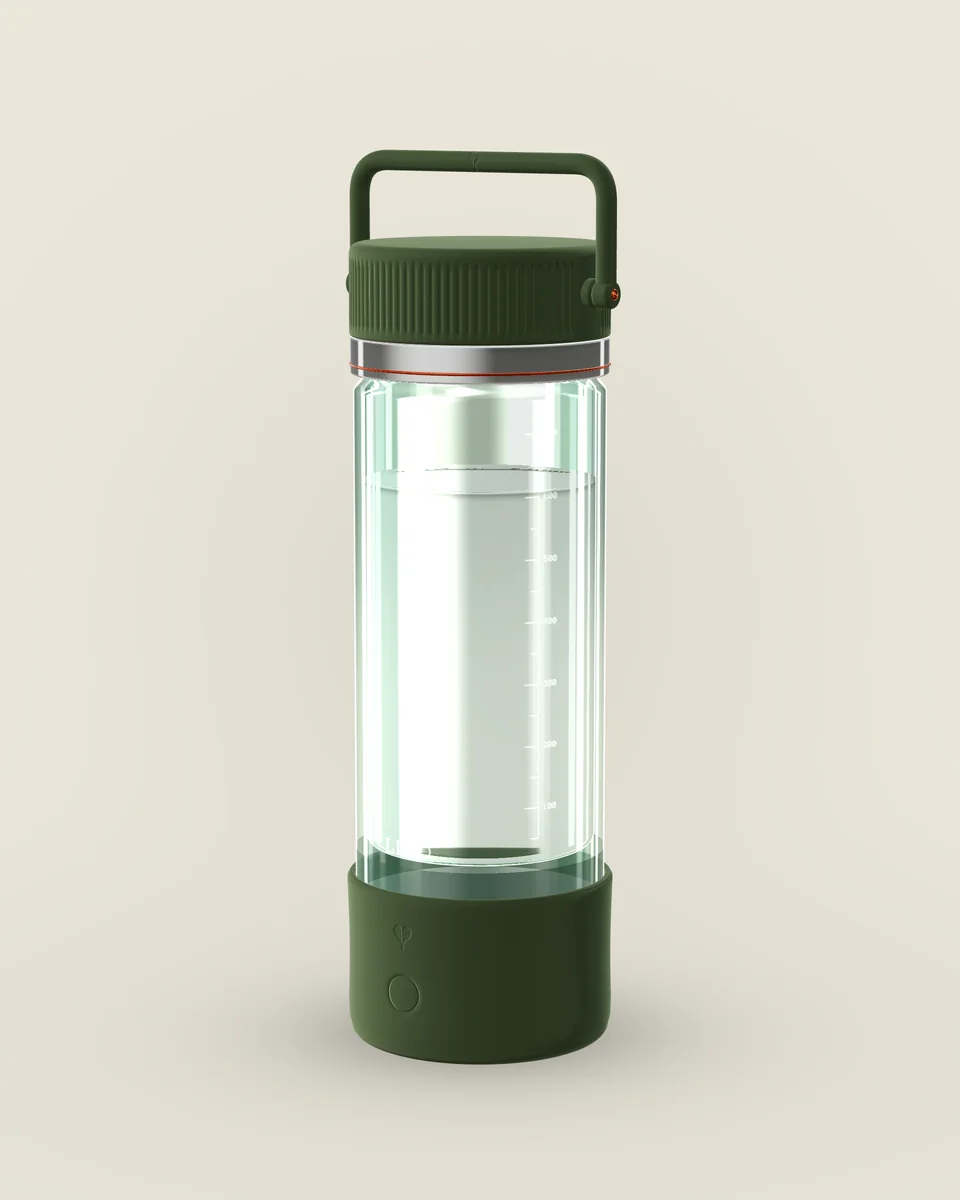
Ours is borosilicate 3.3 with a 3 mm wall. It is lighter than it looks.
- Glass
- Borosilicate 3.3
- Wall
- 3 mm
- Weight
- 520 g (500 ml) / 610 g (750 ml)
Why it tastes of nothing
Glass isn't porous. It doesn't take on smells, it doesn't stain, and it doesn't hold on to yesterday's lemon. Rinse it and it is clean.
Looking after it
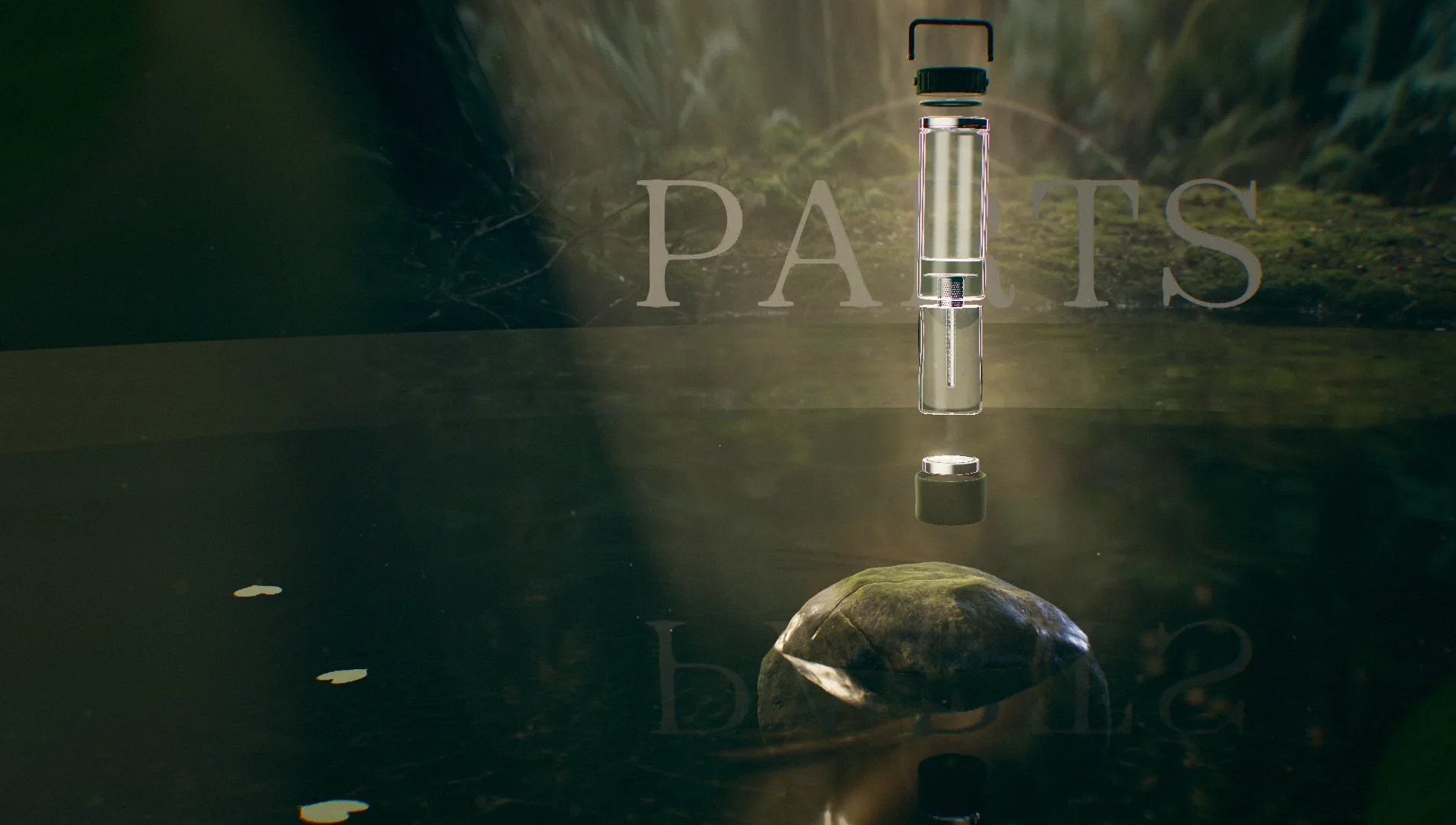
- The glass, lid and seal go in the dishwasher, top rack.
- The UV-C base unscrews. Wipe it clean and keep it out of the dishwasher.
- Keep the sleeve on. It takes the knocks the glass shouldn't.
- When a seal starts to look tired, swap it. A spare set ships in the box.
Glass is still glass. Drop it on stone and it can break, sleeve or no sleeve. Treat it the way you'd treat a good teapot and it will be clear for years.